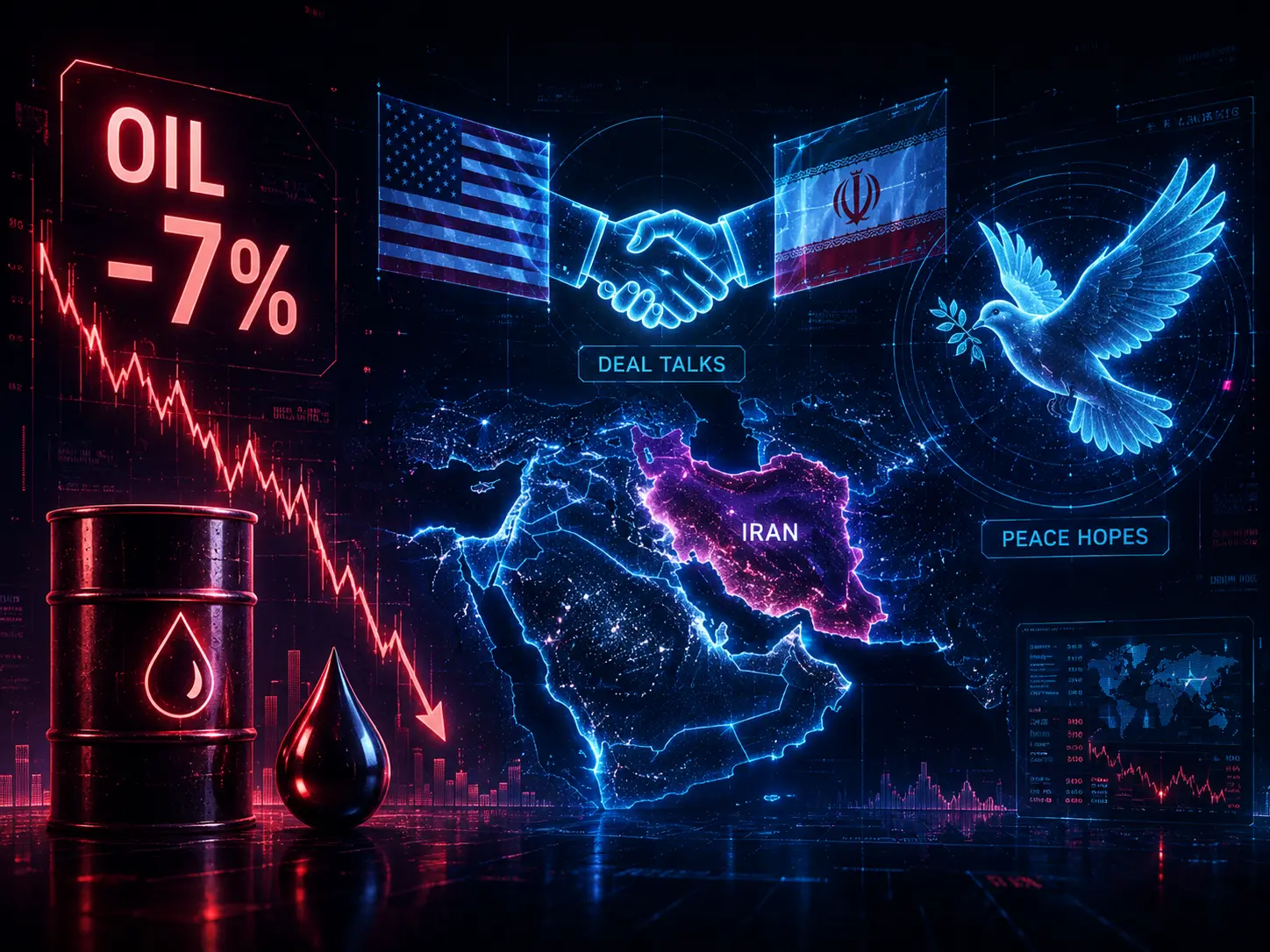
Oil prices fell sharply as investors reacted to growing expectations that the United States and Iran may be moving closer to a diplomatic agreement. The decline marked one of the strongest pullbacks in crude prices in recent weeks, with traders reducing the geopolitical risk premium that had built up during the latest period of Middle East tension.
According to Reuters, crude prices tumbled nearly 7% as markets responded to signs of progress in talks between Washington and Tehran. The move came after weeks of volatility in energy markets, where fears over disrupted supply routes, higher shipping costs, and possible damage to oil infrastructure had kept prices elevated.
The sharp drop in oil reflects a major shift in sentiment. For much of the recent conflict, investors had been focused on worst-case scenarios. These included a prolonged disruption in the Strait of Hormuz, reduced regional exports, and a broader shock to global energy supply. As diplomatic hopes improved, traders began to unwind some of those fears.
Peace Hopes Pressure Crude Prices
The oil market is highly sensitive to geopolitical headlines, especially when they involve the Middle East. The region remains central to global energy supply, and any threat to production or shipping can quickly push prices higher. In this case, however, the market moved in the opposite direction as investors saw a lower chance of a deeper supply crisis.
Brent crude and U.S. West Texas Intermediate both declined as traders reassessed the likelihood of a near-term disruption. The selling was driven less by a sudden change in physical supply and more by expectations. Oil prices often rise before supply is actually lost because traders price in potential danger. When that danger appears to fade, prices can fall just as quickly.
That is what happened here. Investors who had been holding long positions based on conflict risk began taking profits, while others moved to reduce exposure to energy after diplomatic signals improved. The result was a fast and broad decline across crude benchmarks.
Why the Strait of Hormuz Matters
One of the biggest concerns for oil traders has been the Strait of Hormuz, a narrow but crucial shipping route connecting the Persian Gulf with global markets. A large share of the world’s seaborne oil passes through this route, making it one of the most important energy chokepoints on the planet.
Any disruption in the strait can affect oil flows from major producers in the Gulf region. Even the possibility of disruption can increase insurance costs, delay shipments, and force buyers to look for alternative supply. That is why traders had added a significant geopolitical premium to crude prices during the latest period of tension.
If the United States and Iran can reach a deal that improves shipping security or reduces military risk, some of that premium could disappear. The latest price move suggests that investors are starting to believe this outcome is more possible than it was before.
Still, the market is not assuming that the problem has been solved. Even if a framework agreement is reached, restoring full confidence in energy flows may take time. Shipping companies, insurers, refiners, and governments will need evidence that routes are safe and that the risk of renewed confrontation has declined.
Energy Markets React Before the Real Economy
The speed of the selloff shows how forward-looking commodity markets can be. Oil prices do not only reflect barrels currently being produced or consumed. They also reflect expectations about future supply, demand, inventories, political risk, and financial flows.
When traders believe future supply may become more secure, prices can fall even before any new barrels reach the market. In the same way, oil can rise sharply when investors fear a future shortage, even if current supply remains stable.
This forward-looking nature makes oil one of the most volatile major assets during geopolitical crises. News about negotiations, sanctions, shipping routes, military activity, or diplomatic comments can all move prices quickly.
For investors, this means the latest drop should be viewed as a repricing of risk rather than a simple supply-demand adjustment. The market is saying that the probability of a severe supply shock may have decreased. It is not saying that all risks have disappeared.
Lower Oil Could Ease Inflation Pressure
A sustained decline in crude prices would be important for the global economy. Oil affects transportation, manufacturing, aviation, agriculture, chemicals, and consumer fuel costs. When crude prices rise, inflation often becomes harder to control. When crude falls, inflation pressure can ease.
This matters because central banks around the world are still trying to manage the balance between inflation and growth. Higher energy prices can force policymakers to keep interest rates elevated for longer, especially if fuel costs feed into broader consumer prices.
Lower oil prices could give central banks more room to be patient. They may also help consumers by reducing pressure on gasoline and diesel prices over time. For companies, cheaper fuel can improve margins, particularly in transport-heavy industries such as airlines, shipping, logistics, retail, and manufacturing.
However, the benefit depends on whether the decline lasts. A one-day drop is not enough to change the inflation outlook by itself. Central banks will want to see whether crude remains lower, whether fuel prices follow, and whether broader price pressures continue to ease.
Stock Markets Welcome Cheaper Energy
The drop in oil also supported risk appetite in global equity markets. Lower energy prices can be positive for many sectors outside the energy industry. Airlines, travel companies, consumer businesses, industrial firms, and logistics operators often benefit when fuel costs fall.
Investors also tend to become more confident when geopolitical risks appear to cool. A potential U.S.-Iran deal would reduce one of the most important uncertainty factors weighing on markets. That can encourage capital to move from defensive assets back into stocks.
European and Asian markets were among the beneficiaries of the improved mood. Europe is especially sensitive to energy costs because higher fuel prices can hurt industry, weaken consumer demand, and complicate inflation policy. A meaningful decline in crude can therefore improve the outlook for European equities.
At the same time, energy stocks may face pressure when oil falls. Producers, oilfield services companies, and exploration firms often underperform during sharp crude selloffs because investors lower expectations for revenue and cash flow. This creates a split market where lower oil helps many sectors but weighs on energy companies themselves.
Investors Remain Cautious
Despite the positive reaction, the oil market remains exposed to sudden reversals. Diplomatic talks can move forward quickly, but they can also break down without warning. If negotiations stall or military tensions rise again, crude prices could rebound sharply.
Traders will closely monitor official comments from both the United States and Iran, as well as signals from regional governments. They will also watch tanker movements, shipping insurance costs, inventory data, and refinery demand.
The market will need proof that physical supply risks are truly easing. Headlines can drive short-term price moves, but lasting price stability usually requires visible improvement in flows, logistics, and political conditions.
Another important factor is global demand. Even if geopolitical risk fades, oil prices will still depend on consumption trends in the United States, China, Europe, and emerging markets. If economic growth weakens, lower demand could add more pressure to crude. If growth remains resilient, demand may help limit the downside.
What This Means for Investors
For investors, the latest oil move is a reminder that energy markets can change direction quickly. A position that looks attractive during a crisis can lose momentum when diplomacy improves. This is especially true when prices include a large geopolitical premium.
Energy investors should watch whether crude stabilizes after the sharp decline. If prices continue to fall, oil producers may face lower earnings expectations. If prices rebound, it may suggest that the market believes peace hopes have been overestimated.
For broader equity investors, lower oil could be supportive if it lasts. Cheaper energy can reduce cost pressures, improve consumer confidence, and make it easier for central banks to manage inflation. That could help sectors such as transportation, travel, retail, industrials, and selected emerging markets.
Currency markets may also respond. Lower geopolitical risk can reduce demand for safe-haven assets, while cheaper oil can affect currencies of major energy exporters and importers. Countries that import large amounts of crude may benefit from lower prices, while oil-exporting economies may see pressure on revenue expectations.
The Bigger Picture
The nearly 7% drop in oil prices shows how much of the recent rally was tied to fear rather than only physical shortage. As investors saw a higher chance of progress between the United States and Iran, they quickly removed part of the risk premium from crude.
Still, the situation remains fragile. A possible agreement would be a major step toward calming markets, but energy flows do not normalize overnight. The Strait of Hormuz, regional security, damaged infrastructure, shipping confidence, and political trust will all remain important factors.
For now, markets are reacting with cautious optimism. Oil has fallen, stocks have gained, and investors are reassessing the inflation outlook. The next phase will depend on whether diplomatic progress becomes a real agreement and whether that agreement can restore confidence in global energy supply.
If peace hopes continue to build, oil may remain under pressure and broader markets could benefit from lower inflation concerns. If talks fail, however, the recent selloff could reverse quickly. In the oil market, diplomacy and supply risk remain closely connected, and investors are likely to stay alert until there is clearer evidence that the crisis is easing for good.